
Journal · hanging & install
When to call an installer — and when a hammer is enough.
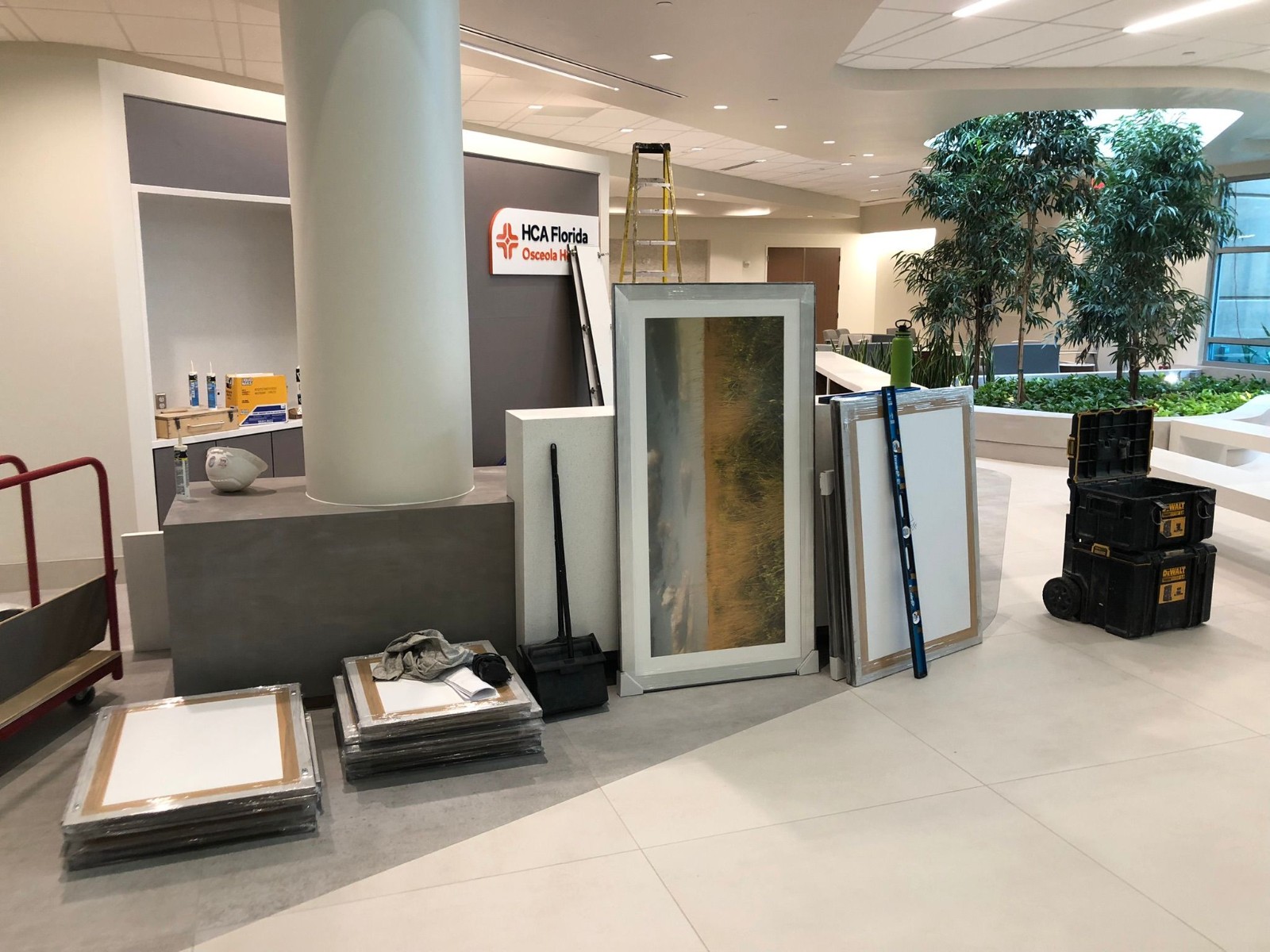
Not every nail needs a crew. Not every wall should be a Saturday experiment either. Here's how we draw the line at the bench.
One nail is fine. A whole wall may need a crew.
DIY is fine when…
- One or two pieces under ~30″ on the long side
- Solid drywall or known studs, standard picture hooks or a French cleat you already understand
- You're comfortable leveling and willing to patch one mistake
Use the 57-inch center rule, paper templates on the wall, and hardware rated for the weight. Glass is heavier than people guess — acrylic helps on big pieces for exactly that reason.
Call a pro when…
- Oversize or heavy — big museum glass, stacked mouldings, shadowboxes with depth
- Salon / gallery walls — ten-plus pieces that need to read as one composition
- Hard walls — concrete, brick, tile, plaster that laughs at plastic anchors
- Commercial & hospitality — hotels, offices, lobbies, insurance and schedule matter
- High placement — stairwells, two-story foyers, anything that needs a lift
That's not upselling. It's the difference between a clean hang and a cracked pane or a crooked line you stare at for years.
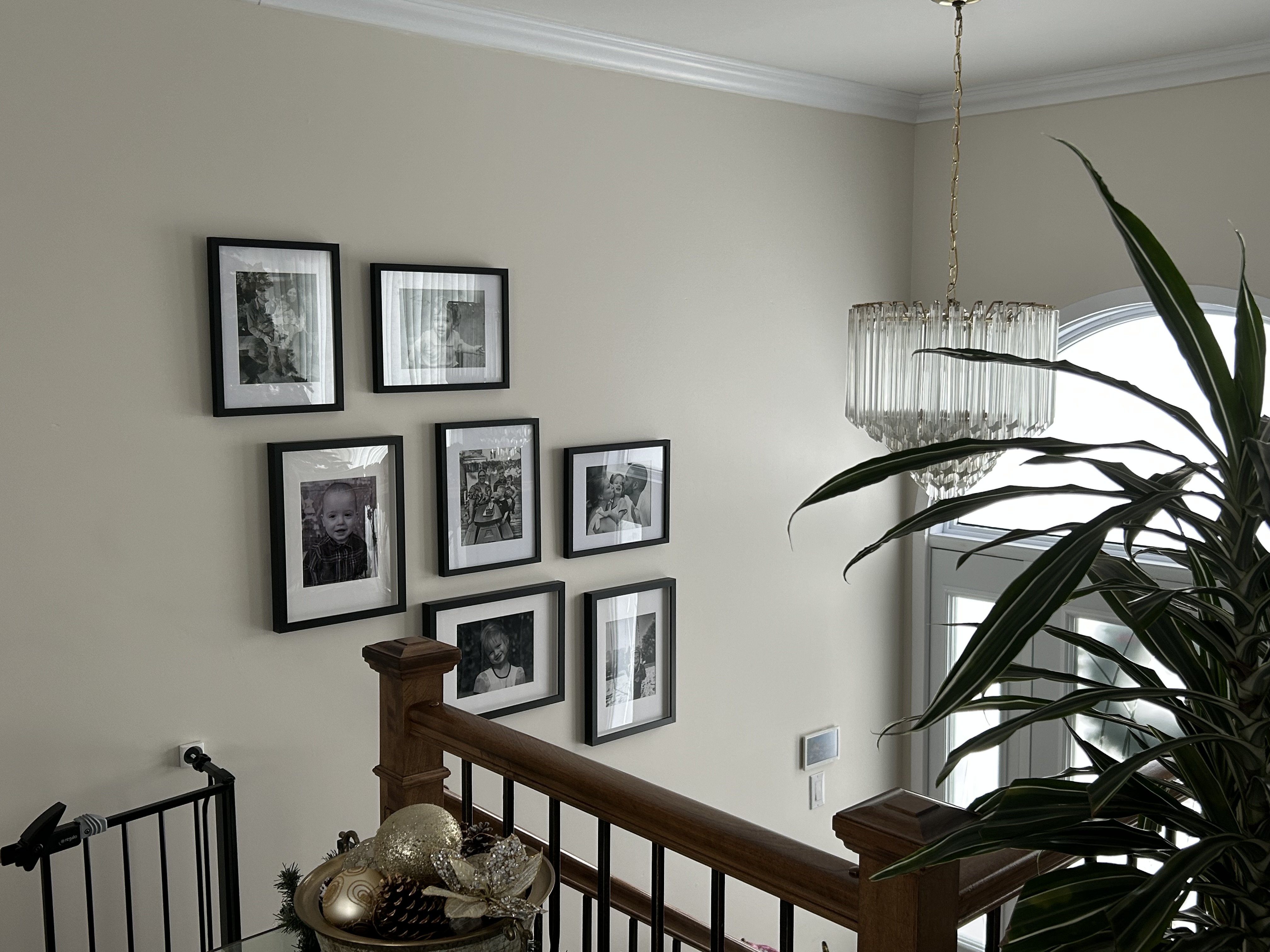

What we bring that a hardware-store trip doesn't
Hardware matched to the build (not whatever was in the junk drawer), spacing that matches the design you approved, and a crew that already handled the piece at the bench. For trade projects we schedule with your phase dates — not "sometime next month."
Ways in
Local delivery & install · Book a consult if the wall is the hard part · Trade / hospitality.
Tell us the wall. We'll tell you if you need us.
ZIP, piece count, and a photo of the wall is enough to start.
Ask about delivery & install