
Custom framing · Fine art
Real conservation framing has one rule above the rest: everything is reversible. A hundred years from now, the piece should be able to leave the frame exactly as it went in.
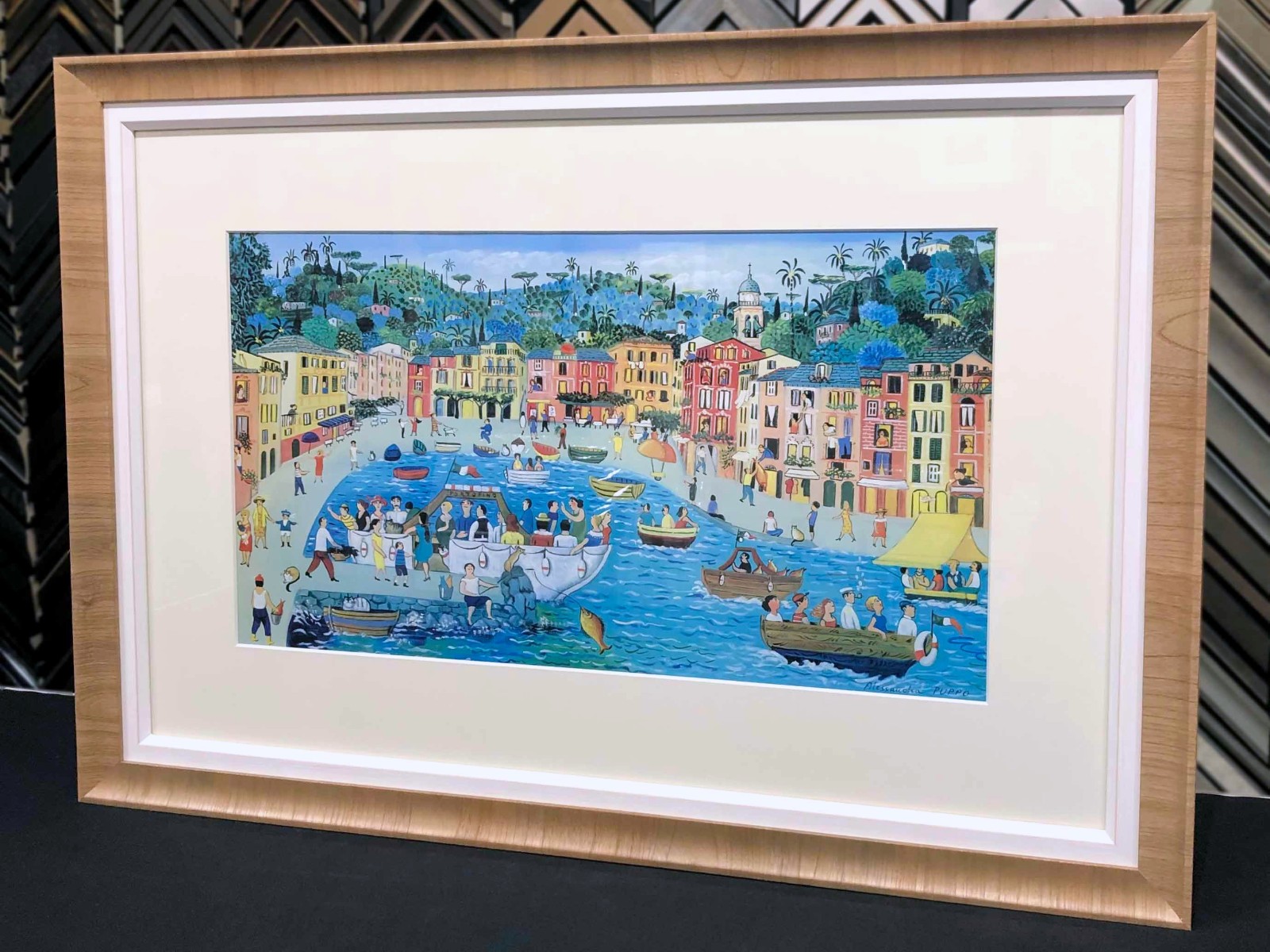
From the bench

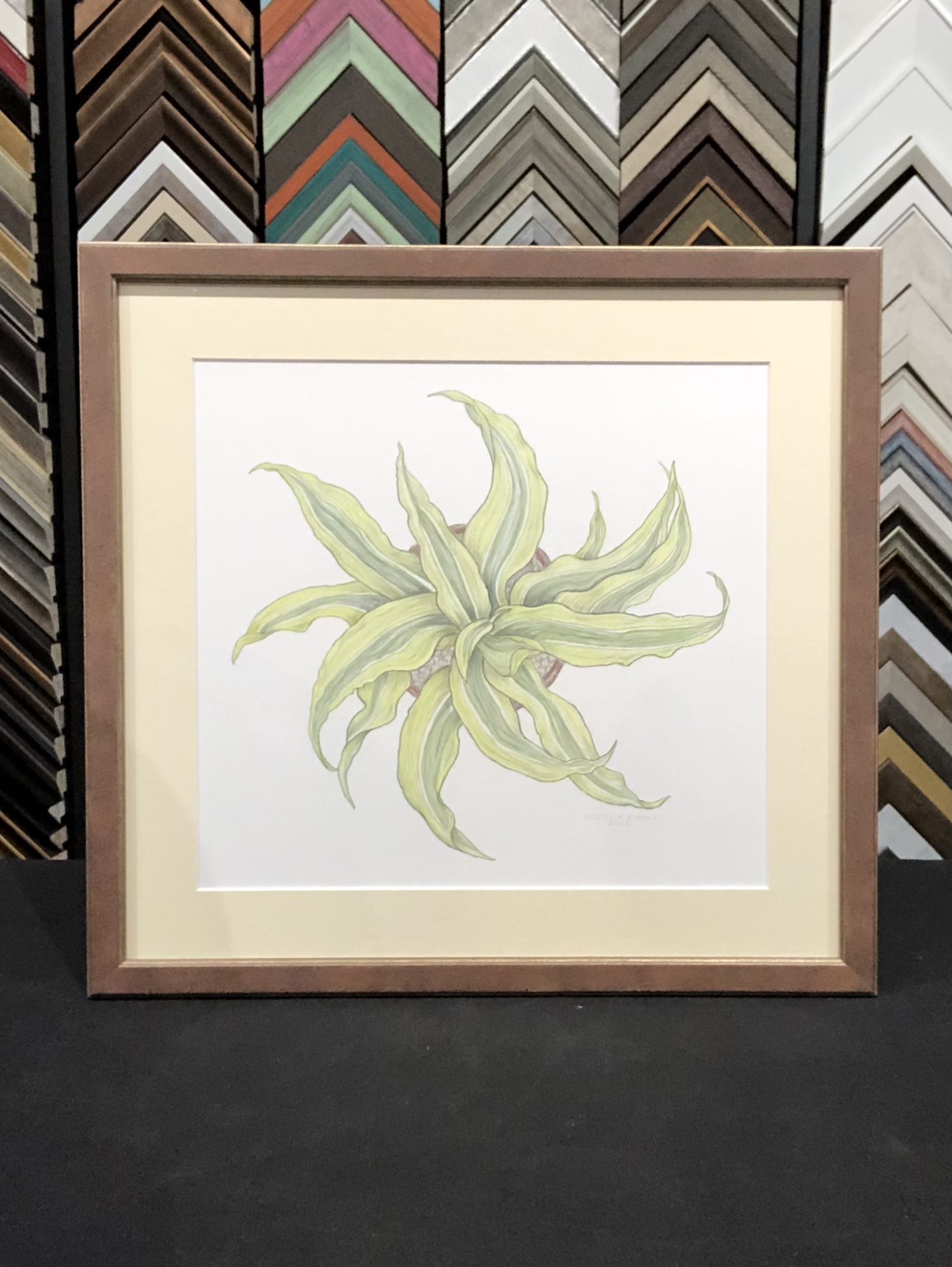
How we frame it
Works on paper are hinged with archival materials that release cleanly — never trimmed, never dry-mounted, never glued. The frame protects the piece and makes no permanent decision on its behalf. That's the line between framing and preservation.
Cotton-rag matting is chemically stable, so it won't burn a line into the paper over time — and it lifts the glass off the surface so the art can't stick to it. On a piece with any value, sentimental or otherwise, that margin of air matters.
Museum-grade glazing blocks UV and kills reflection, so the glass disappears and the work reads the way the artist meant. We'll tell you when a piece calls for it — and when good conservation glass is plenty.
Common questions
Framing built entirely from reversible, archival materials — acid-free hinges, rag mats, UV glazing — so the artwork can be removed later undamaged. Nothing is trimmed or glued.
No — original art on paper is hinged, never dry-mounted, so it stays reversible. Dry-mounting is only for reproductions where permanence is fine.
For valued or sun-exposed pieces, yes: it blocks UV and removes glare. For many pieces, standard conservation glass is enough — we'll give you a straight answer.
Ready when you are
Upload a file and design it online with the price in front of you — or walk it into the shop. Same bench either way.
What people say