Custom framing · Textiles
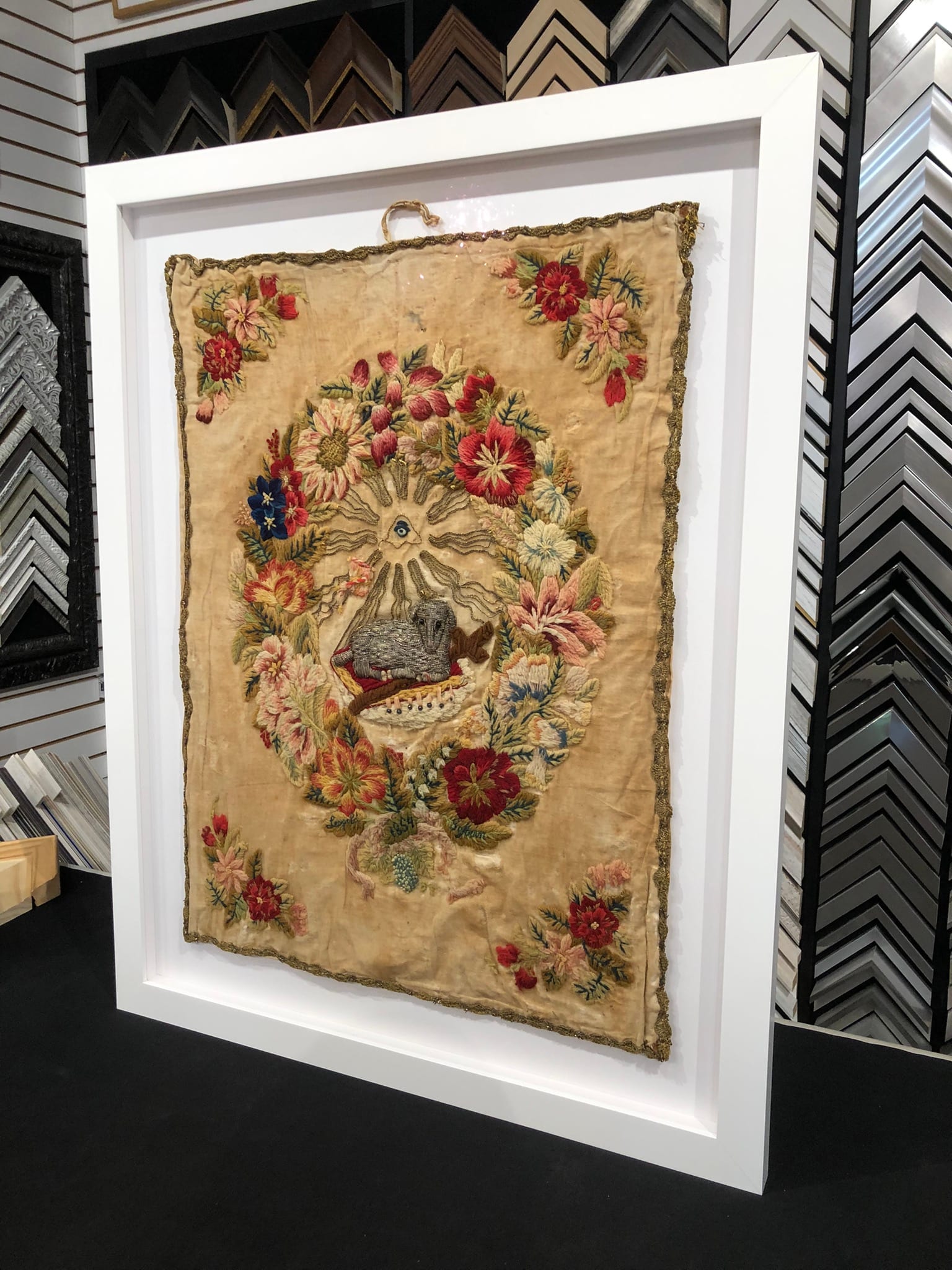
A needlepoint or a tapestry is thread under tension. Framed right, it stays square and taut for generations; framed wrong, it puckers and sags within a year.
From the bench
How we frame it
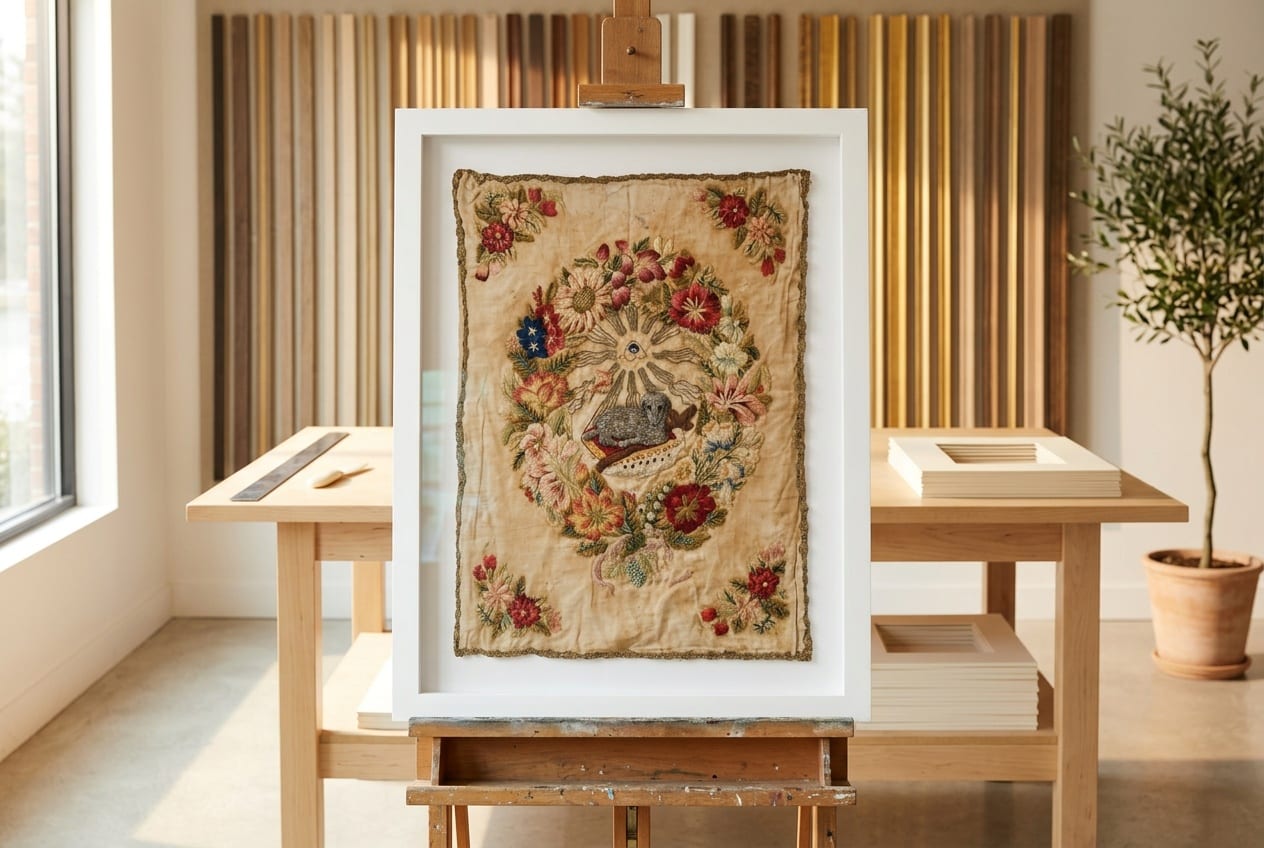
Needlework is gently blocked back to square and mounted with stitches or lacing onto an acid-free support — never stapled or glued through the threads. Done properly, the tension is even across the whole piece, so it lies flat and stays flat.
Textiles need a gap between the surface and the glass, or the fibers press flat and can wick moisture. Hidden spacers hold that margin of air, which in a humid climate is what keeps the piece from ever touching the glass.
Antique tapestries and hundred-year embroidery are handled as conservation pieces — reversible mounting, stable materials, UV glazing to hold the color that survived this long. It came out of a drawer intact; it should stay that way on the wall.
Common questions
It's blocked back to square and mounted with lacing or stitches onto acid-free backing — never stapled or glued. That keeps the tension even so it stays flat.
Glazing with hidden spacers protects it and keeps dust and humidity off — the spacers hold a gap so the threads never touch the glass.
Yes, as a conservation piece — reversible mounting, stable materials, and UV glass to protect the color that's survived.
Ready when you are
These pieces need the object itself. Bring it to Fort Lauderdale, or pack it carefully and mail it — we unpack, photograph, and confirm the design before anything is cut.
What people say